
When "Fine" Isn't Good Enough
Why your best work goes unnoticed

The Invisible Work
In 2018, I stepped into a new role responsible for a supply chain valued at £30-35 million. At least, that’s what the paperwork said. The problem was that I couldn’t actually see how we’d arrived at that number.
Eventually, I found a room in our building—about 20 feet by 20 feet. Inside were filing cabinets, and inside those filing cabinets were the contracts. Nobody had looked at most of them in years. They just existed. They represented commitments, relationships, and spending. But to understand what was actually happening with that supply chain, I needed to open drawer after drawer, pull out folder after folder, and piece it together manually.
What follows comes from nearly a decade across procurement, legal, supply chain, and now Product Marketing for procurement technology. I’ve been in the filing cabinet room. I’ve been on-site with suppliers. I’ve lived through the burnout of bad systems and the relief of good ones. These aren’t generic observations—they’re specific insights from specific experiences.
I keep this work behind a paywall, not because I’m trying to maximise revenue, but because I don’t want it everywhere. I’m not writing for the algorithm or hoping something goes viral on LinkedIn. I’m writing for the small group of people who are genuinely trying to elevate how procurement works in their organisations. The ones who see this as a craft worth getting better at, not just a function to manage.
If that’s you, the paid subscription is how you signal you’re serious about this work. It’s how we keep this community focused and considered. And honestly, it’s how I know I’m writing for people who will actually use this stuff, not just skim it.
This isn’t a cautionary tale about poor record-keeping. It’s about something more fundamental: the way procurement work tends to accumulate in the margins of organisations, critical but invisible, until suddenly someone needs to make sense of it all.
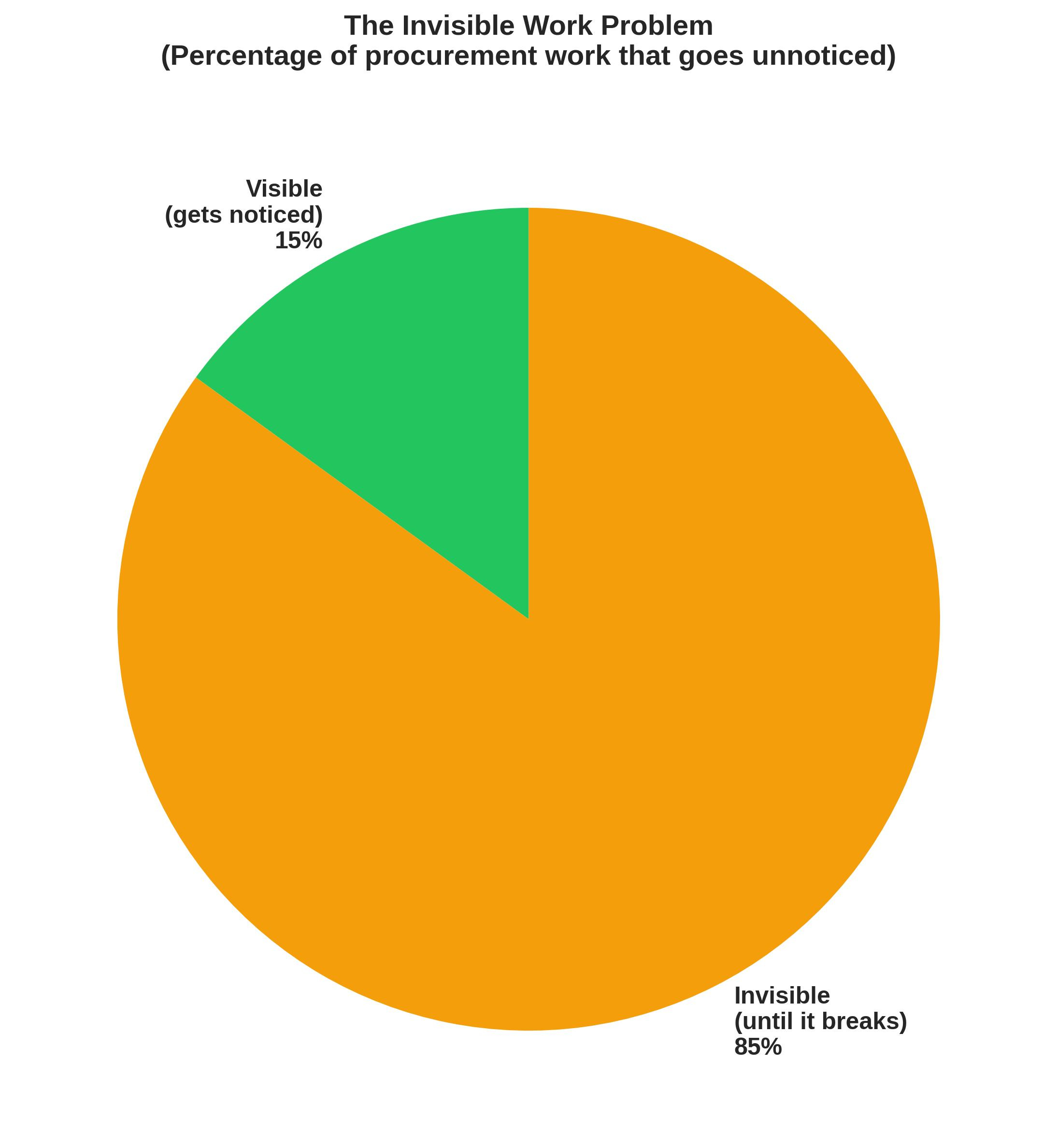
When Nobody Notices
Here’s the thing about good procurement. It doesn’t announce itself. The electricity works. The software subscriptions are current. The cleaning service shows up. The hardware gets ordered when engineering needs it. Nobody celebrates these things because they’re supposed to happen.
Good procurement is the organisational equivalent of a well-maintained heating system. You only think about it when it breaks.
I’ve worked in environments where procurement hummed along in the background. People knew it existed, but it worked smoothly without taking centre stage. The entire business benefited without necessarily noticing. Those were incredible places to work, particularly in defence organisations where getting it right really mattered.
I’ve also worked in environments with poor procurement practices. That’s completely different. That generates complaints. Delays on essential purchases. Vendor disputes that spill into legal. Security risks from suppliers that weren't properly vetted. Suddenly, everyone has an opinion about procurement, and none of them are positive.
The gap between these two states creates a particular kind of pressure. Your best work goes unnoticed, and your mistakes define you.
The Spreadsheet Tax
When you’re managing procurement through spreadsheets and email chains, there’s a specific kind of exhaustion that comes with it. Not the exhaustion of challenging work, but the exhaustion of fighting your tools to do a relatively straightforward job.
Someone needs to track savings across suppliers. You create a spreadsheet. Someone else needs to monitor contract renewals. Another spreadsheet. Risk tracking? Spreadsheet. Performance metrics? You can see where this is going.
Each spreadsheet makes sense in isolation. The problem is they don’t talk to each other. So when someone asks, “What’s our exposure to this supplier across all our contracts?” you’re manually hunting through multiple files, cross-referencing, hoping you haven’t missed anything.
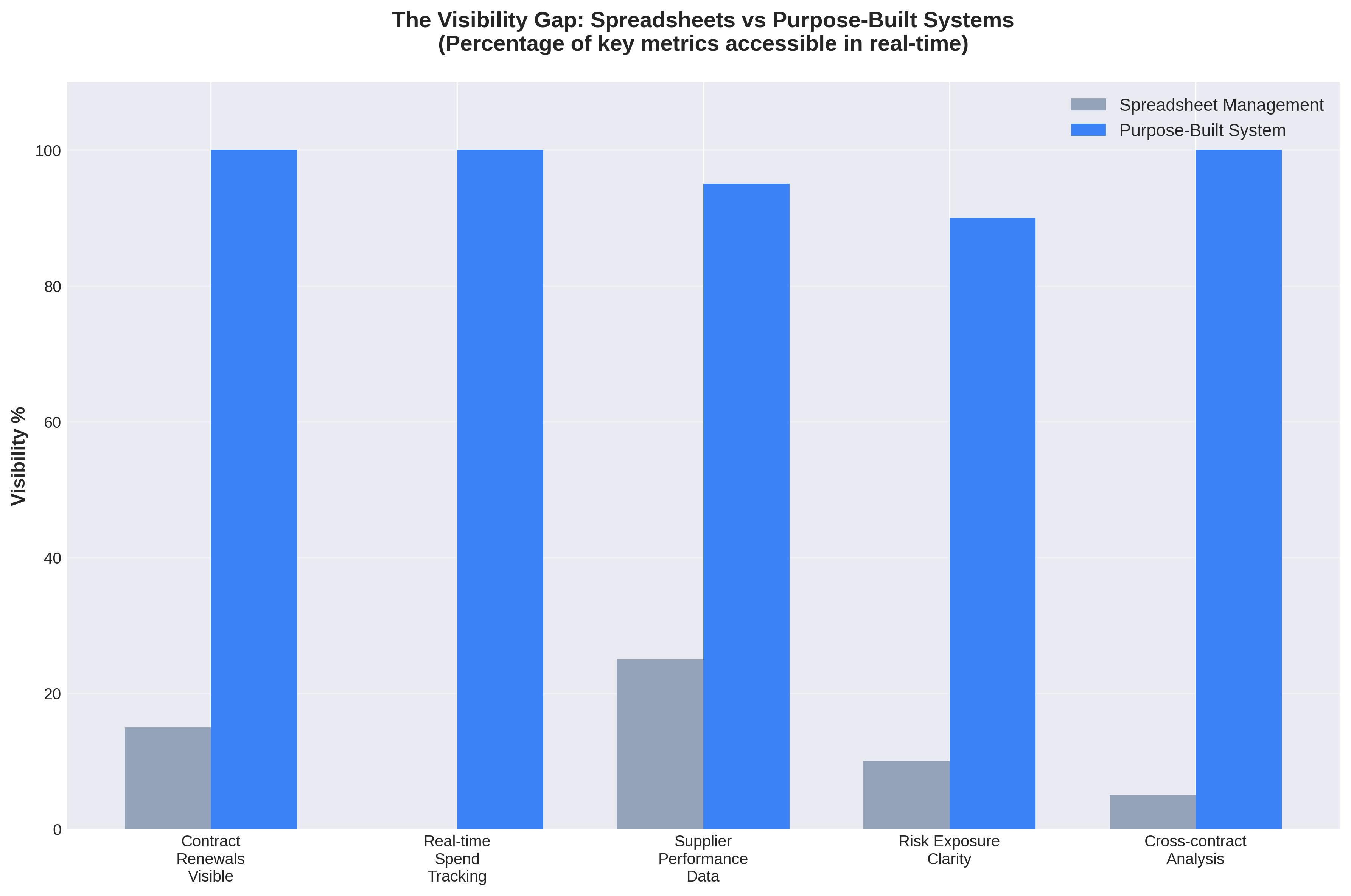
And the question itself is reasonable. Actually, it’s essential. The difficulty in answering it isn’t a reflection of the question’s complexity. It’s a reflection of trying to use tools designed for calculation to manage organisational relationships and commitments.
What Changes
The transformation from that room of filing cabinets to modern procurement systems isn’t primarily about storage. It’s about visibility. When you can see your entire supply chain at once (contracts, spending, performance data, risks), different decisions become possible.
